

Surprising fact: most DeFi losses are not caused by cryptographic breaks or impossible mathematics, but by predictable integration failures — mismatched token standards, sloppy approval mechanics, or a dApp assuming a wallet will behave the way a smart contract wants. That sentence overturns a common expectation: security in DeFi is rarely only about private keys and signatures; it’s often about the small, mechanistic assumptions made where wallets, dApps, and chains meet.
In the US context — where regulatory pressure, variable gas markets, and user experience expectations collide — understanding integration risk is a practical necessity. This article unpacks what «dApp integration risk» actually means, how it has evolved, where it breaks, and what a careful DeFi user or integrator should do to reduce exposure. You’ll leave with one concrete mental model for evaluating integrations, one corrected misconception about wallet features, and several operational heuristics you can apply when interacting with or auditing a protocol.
How integration risk works — the mechanism, not the headline
Integration risk is fundamentally a mismatch problem. A dApp emits a transaction or asks a wallet to perform actions that depend on assumptions about transaction ordering, allowance state, token behavior (ERC-20 quirks, ERC-721/1155 semantics), gas market behavior, or the wallet UI. When any of those assumptions are false — because a user pre-approved an unlimited allowance, because a token reverts on transferFrom under certain internal states, because a wallet routes approvals differently — the outcome can be funds stuck, unexpected losses, or failed atomic flows.
Mechanistically, there are a few recurring patterns: (1) approval semantics: many dApps require ERC-20 approvals; when combined with «infinite approvals» UX, this creates a persistent exposure unless the integrator or wallet simulates and warns. (2) Gas and reentrancy timing: a multi-call transaction that assumes a certain gas ordering can fail on a congested chain or in a different EVM implementation. (3) Token edge cases: transfer hooks, fee-on-transfer tokens, and tokens that return boolean values inconsistently. (4) UX-API gaps: a dApp may build client-side assumptions that break with wallets providing additional simulation or blocking features.
Historical evolution and why the problem matters now
Early DeFi was optimistic: protocols designed using the same handful of wallets and token implementations, and integrations were brittle but manageable. As DeFi matured, variety exploded — many token types, many wallets, cross-chain bridges, and richer wallet features like transaction simulation, multi-sig, and permission controls. That diversity improved functionality but increased the surface area for mismatch. What used to be a single failure mode (bug in a contract) became a combinatorial web: wallet behavior × dApp expectation × token semantics × chain conditions.
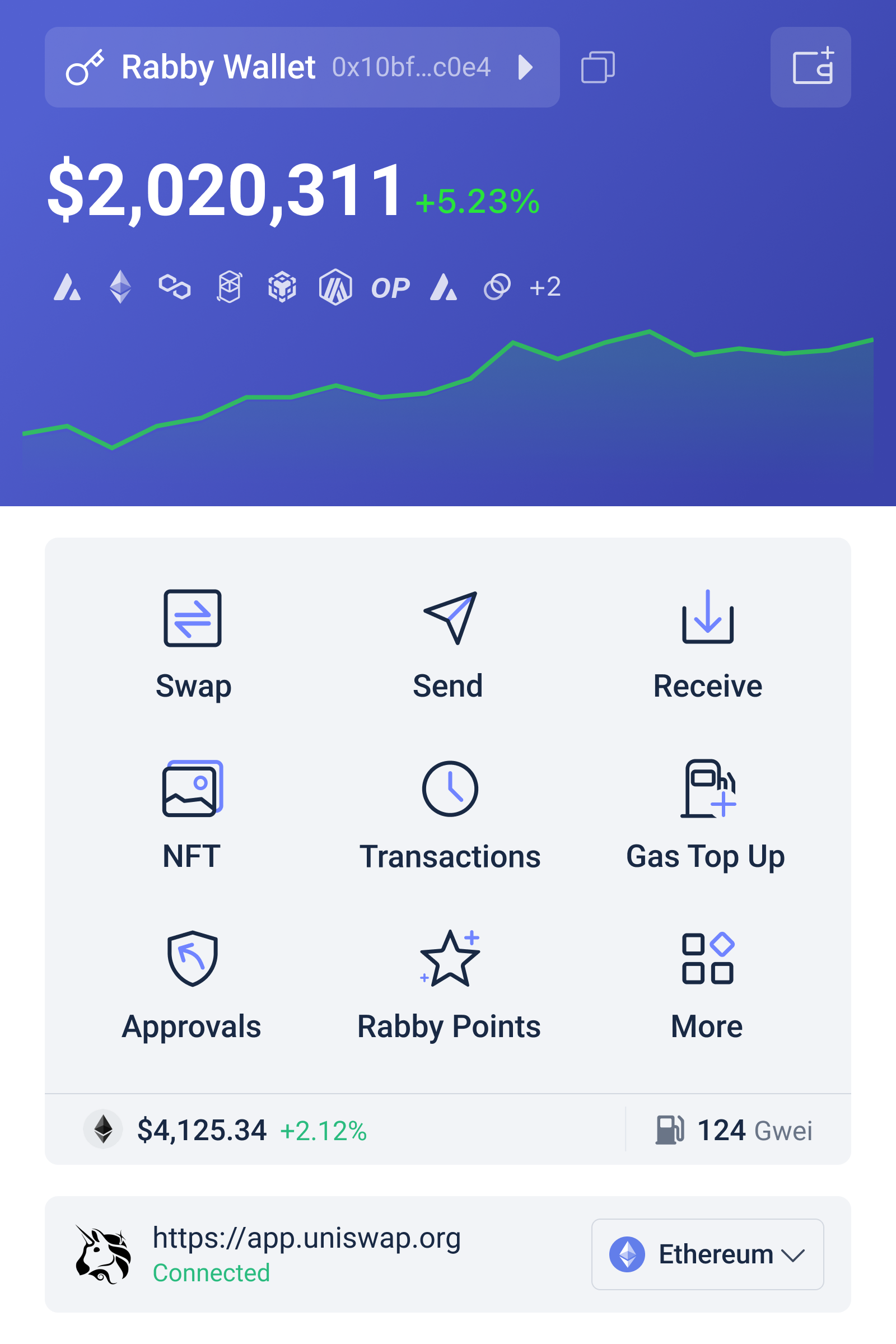
This week, Rabby Wallet reaffirmed its position as a go-to choice for Ethereum and EVM users, highlighting fast, on-chain-first features and security-focused tooling. Those product shifts illustrate the practical response to integration risk: wallets are moving from passive cryptographic signers to active transaction interpreters that simulate and warn before signing, which changes the locus of trust and the mitigation strategies DeFi users should adopt.
Three myths about integration risk — and the reality
Myth 1: «If the contract is audited, integration is safe.» Reality: Audits typically review on-chain code paths, not the myriad ways a dApp and wallet will interact under live conditions. An audited contract can still be misused by a front-end that constructs unexpected calldata, or by a wallet that auto-approves certain flows.
Myth 2: «Unlimited approvals are a convenience—not a risk.» Reality: Unlimited approvals are a convenience only if you control the counterparty. If a protocol is compromised or a malicious dApp obtains an allowance, the exposure is immediate and persistent. Transaction simulation and granular allowance management materially reduce this exposure.
Myth 3: «All wallets behave the same.» Reality: wallets differ in how they estimate gas, batch calls, simulate state changes, or present approvals to users. A wallet that simulates transactions and surfaces internal token behavior will prevent classes of failures that a simpler signer cannot.
Decision-useful framework: the four Cs for evaluating an integration
When you assess a dApp or a wallet interaction, run it through this compact mental model: Compatibility, Containment, Clarity, and Contingency.
— Compatibility: Do the token standards and expected behaviors match? Check for fee-on-transfer tokens, non-standard return values, and whether the dApp uses permit patterns. Also examine how the wallet processes multi-call transactions and gas estimation.
— Containment: What limits are in place if a call goes wrong? Look for per-call allowances, time-limited approvals, and circuit-breaker functions in the dApp. Wallets that let you sign single-use approvals or simulate the worst-case slippage give better containment.
— Clarity: How clearly does the dApp describe the action? Ambiguous or buried approvals are red flags. Good dApps specify exactly what they need, why, and for how long. Wallets that surface a clear human-readable summary of the calldata materially reduce cognitive load and error.
— Contingency: What’s the recovery path if things go sideways? Are there on-chain pausers, admin controls, or governance mechanisms? From a user perspective, can allowances be revoked quickly, and can transactions be replaced or canceled with a higher gas fee? The availability of these options should affect how much exposure you accept.
Practical heuristics and tools
Rule 1: Favor wallets that simulate transactions and display the actual state changes a transaction will cause. Simulation reveals many integration mismatches — for example, a token that reverts in certain states or a contract that will burn part of the transfer as a fee.
Rule 2: Prefer per-use approvals or wallets that can temporally limit allowance duration. If a dApp insists on unlimited approval, treat it as a higher-risk decision and consider using a vault pattern or intermediary contract you control.
Rule 3: Test marginal flows on testnets and with small amounts first — especially cross-chain or bridge operations. Integration assumptions almost always surface under atypical conditions: low liquidity, high gas, or when interacting with wrapped or rebasing tokens.
Rule 4: For US users, consider how on-chain privacy and off-chain KYC interactions may intersect with recovery options and legal recourse. This is procedural rather than cryptographic: custody disputes and frozen funds often hinge on what counterparty controls which key and where the off-chain agreements live.
To put the heuristics into practice, wallets with advanced simulation and security-first UI — which now include market-focused options — offer substantial risk reduction. They do not eliminate risk, but they shift the failure modes toward observable warnings and reversible choices.
Where these defenses break down — limitations and trade-offs
Simulation is powerful but imperfect. Simulators rely on a snapshot of chain state; front-running, MEV (maximal extractable value), and race conditions can change outcomes between simulation and on-chain execution. Similarly, per-use approvals reduce long-term exposure but add friction that some users and dApps resist. There is a trade-off between security and seamless UX: stronger containment often means more clicks and higher gas costs.
Another unresolved area is composability across emerging token standards and Layer-2 rollups. A wallet that simulates well on one L2 may miss subtle rollup-specific sequencing rules or optimistic delay windows on another. These are active engineering and research problems; expect improvements, but also expect temporary regressions as new EVM variants and standards arrive.
What to watch next (conditional signals, not predictions)
Watch for three signals that will reshape integration risk in the near term: (1) broader adoption of EIP patterns that standardize token behavior and approvals (if such standards gain traction, integration brittleness falls), (2) wallet ecosystems shifting toward pre-sign simulation and richer allowance controls (which reduces surprise losses), and (3) protocol-level mitigations like built-in allowance revokers or guardian multisig features. Each of these is conditional: standards require broad adoption to matter; wallet improvements reduce risk only if users enable and trust those features.
If you are evaluating which wallet to use right now, prioritize one that treats simulation and clear UI as first-class security features rather than icing on the cake. For users and integrators focused on EVM chains and Ethereum mainnet behavior, the practical choice is a wallet that evolves from mere signer to active interpreter of transactions and allowances.
For convenience and to explore a wallet that emphasizes transaction simulation and security features, consider examining options that explicitly highlight those capabilities, such as the wallet discussed recently as a go-to for Ethereum and EVM users: https://rabby-wallet.at/
Bottom line
Integration risk is a different kind of threat than a straight smart-contract bug: it is a systems problem created where code meets UI, where wallet features meet dApp assumptions, and where human convenience meets cryptographic power. You cannot eliminate it, but you can shift its consequences. Use a wallet that simulates, prefer granular approvals, test marginal flows, and insist on clarity from the dApps you use. Those steps compress the attack surface from unpredictable integration failures into controllable decisions.
FAQ
Q: Can transaction simulation guarantee safety against all front-running or MEV attacks?
A: No. Simulation provides a precise preview of how a transaction will behave against current state, which catches many integration mismatches, token quirks, and reentrancy risks. However, simulations are inherently a state snapshot. Front-running, MEV, and changes to mempool ordering can alter outcomes between simulation and actual mining. Treat simulation as a strong diagnostic, not a formal guarantee.
Q: Is it safer to always use single-use approvals instead of unlimited approvals?
A: Generally, yes—single-use or time-limited approvals reduce persistent exposure. The trade-off is convenience and gas costs. For high-value or trustless interactions, the extra friction is worthwhile. For frequent, low-value actions with a trusted counterparty, a risk-tolerant user might accept broader allowances, but only with monitoring and quick revocation tooling in place.
Q: How do I test whether a dApp handles a particular token correctly?
A: Use a testnet or forked mainnet environment and create the exact sequence the dApp will execute. Check how the dApp behaves with fee-on-transfer tokens, tokens that revert on transfers, and tokens with nonstandard return values. Also simulate adverse network conditions—high gas, low liquidity—to uncover timing and ordering assumptions.
Q: Will standardization (EIPs) solve integration risk?
A: Partial improvement is likely if standards for approvals and token behaviors gain adoption, but standards alone do not remove UX or state-timing issues. Integration risk is multi-dimensional: standards help with compatibility, but containment, clarity, and contingency still require engineering and product choices.